

How To Draw A Horse From Your Imagination
Index
- Introduction
- Getting the Structure through Unproblematic Forms
- Sketch
- Make clean Art
- Flats
- Color
- Presentation
ane. Introduction
Hello everyone, and welcome to my new tutorial! Do you like animals? In this tutorial, I volition teach techniques to draw horses in unlike poses in a fast, simple, and effective way. Despite the love we have for all animals, it is somewhat challenging to transfer to paper by drawing.
The first fundamental step, both for this illustration and for any other, is accurate references. I volition create a reference board to achieve the best result in my illustrations. This time I volition use Clip Studio Paint, the digital painting application. Still, this tutorial content is too applicable to those who utilise traditional art materials or other applications. Are you lot ready to learn? Let's get started!
two. Getting the Structure through Simple Forms
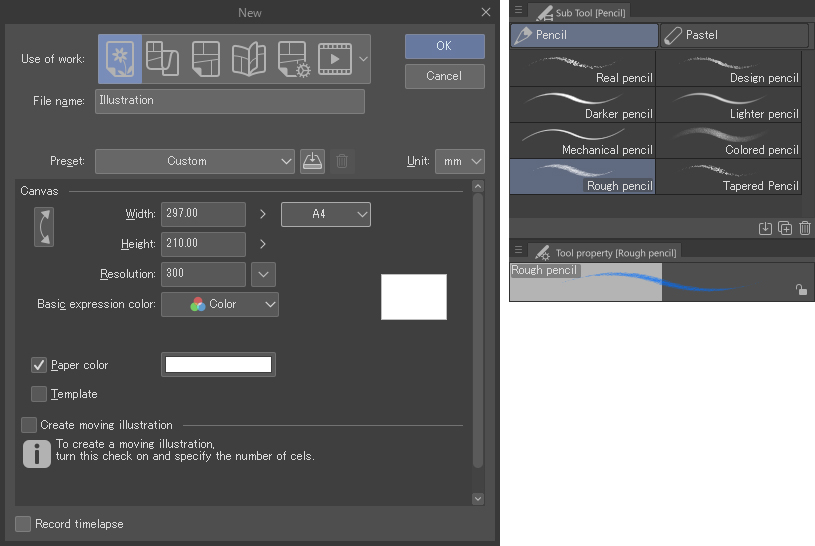
Open a new file in Prune Studio Paint (File> New> A4, horizontal, white), and select the pencil tool Rough pencil in blueish for the sketch.
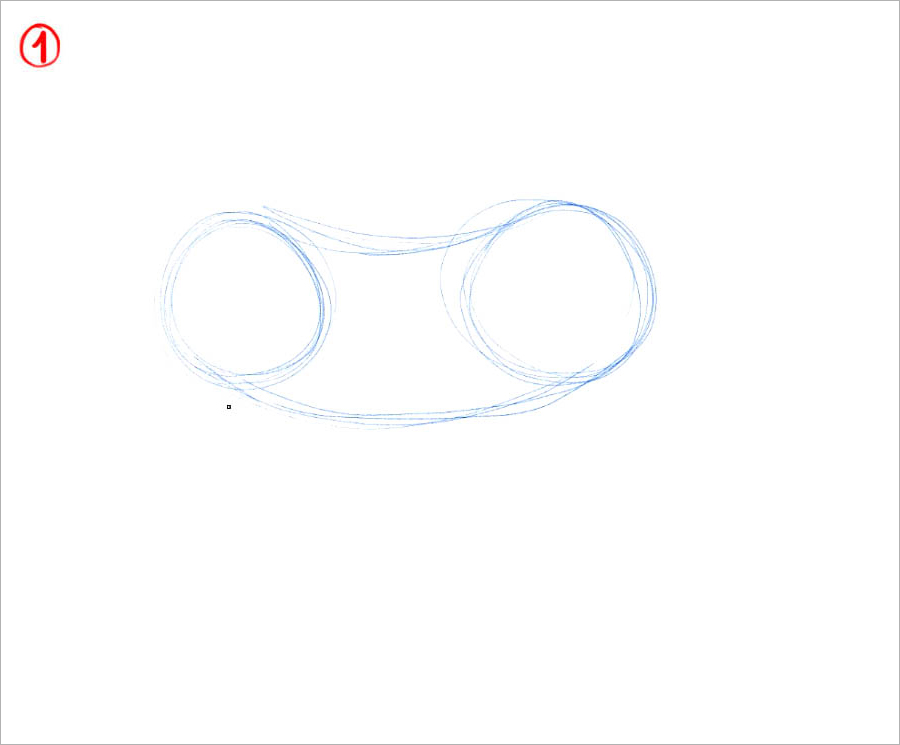
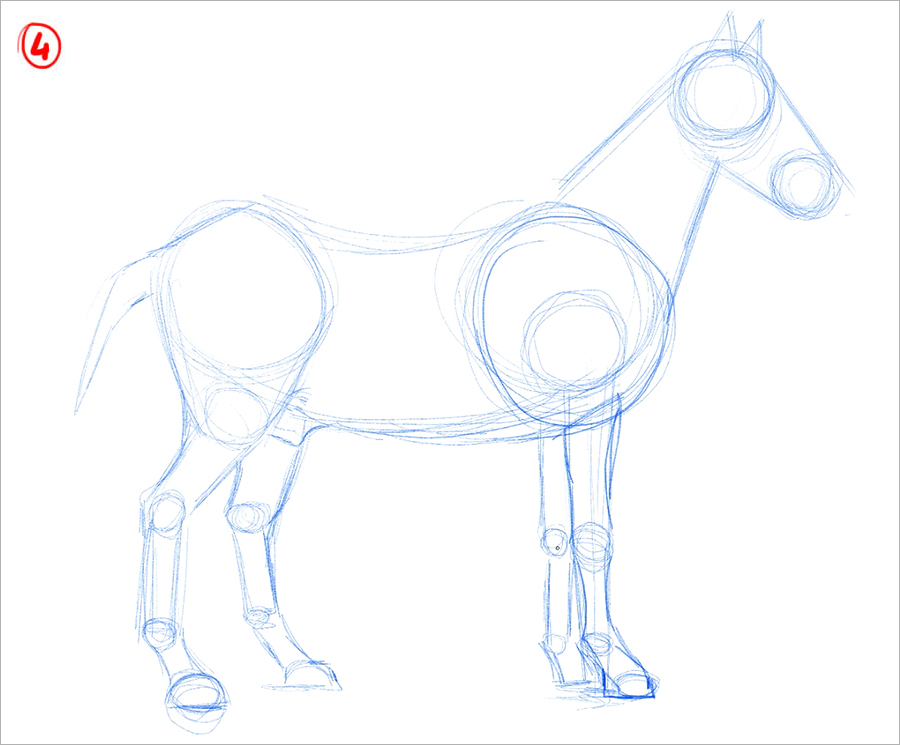
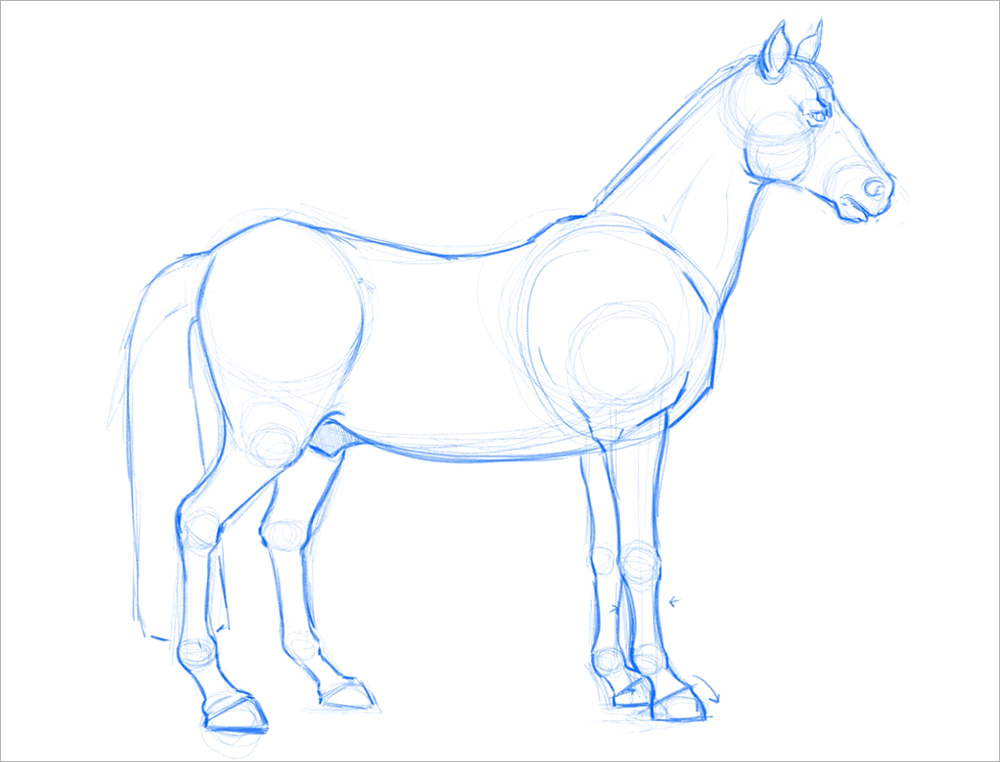
Let us divide each procedure of the cartoon into a layer. The showtime is going to exist the crude sketch. Outset the first few lines using simple shapes like circles, ovals, rectangles, and triangles, getting closer and closer to the anatomy of the horse. Imagine a horse from a side view; what are the well-nigh appropriate shapes?
To begin, brand 2 approximately equal circles joined by two horizontal curved lines (1), resembling the shape of a edible bean.
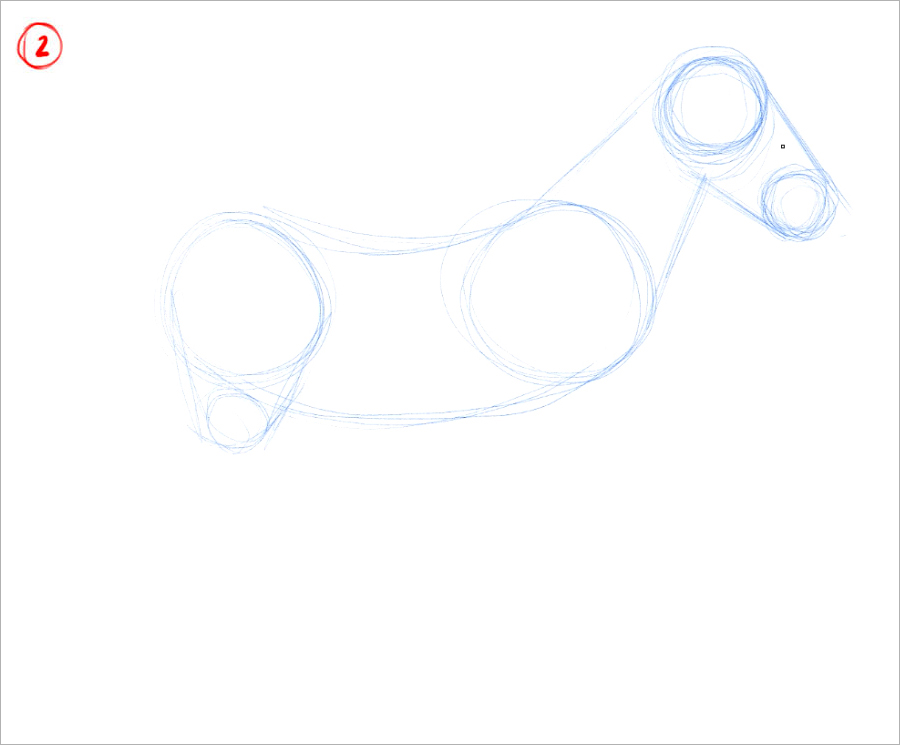
Next, depict 2 smaller circles for the head. Connect these with elementary lines to make its skull, and then join it to the body with two direct lines for its neck (ii).
At present, I focus on its legs: The forepart ones are simpler since you simply need a couple of rectangles and circles for the joints, ending in two diagonal lines that connect to an oval representing the hoof (3).
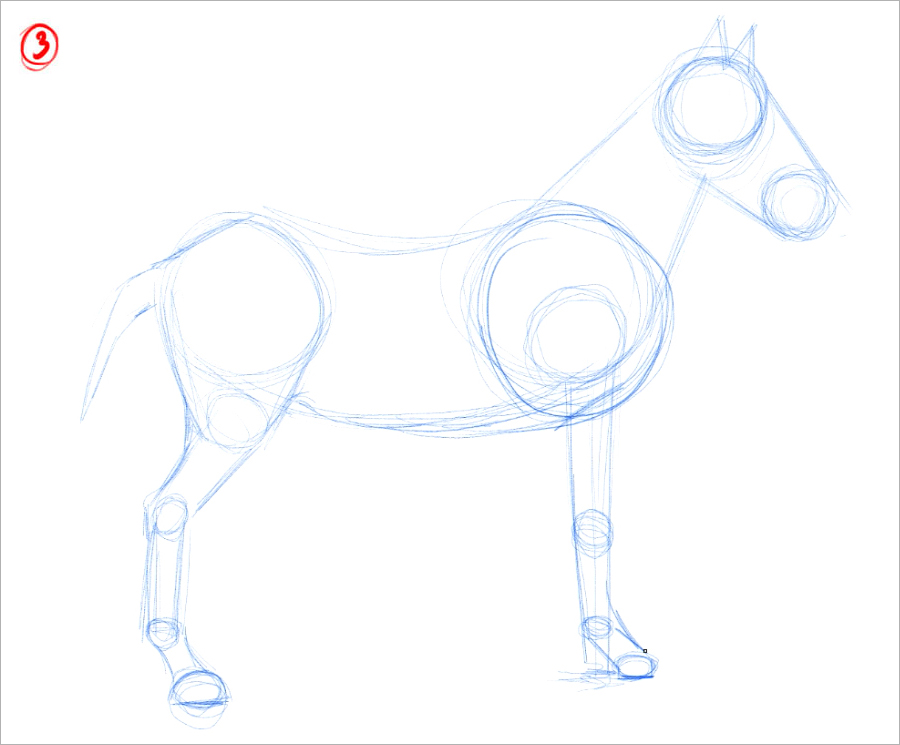
For the back legs, draw a small circumvolve under the dorsum cease of the equus caballus to shape the thigh, and as with the front legs, describe the dorsum legs with lines and circles —only this time, in that location are ii diagonal sections (4). Look at the following prototype:
iii. Sketch
Once the construction is set, it is time to ascertain the shape of the horse's body by joining all the previously drawn lines. Hither you can use line weight to ascertain relevant anatomy.
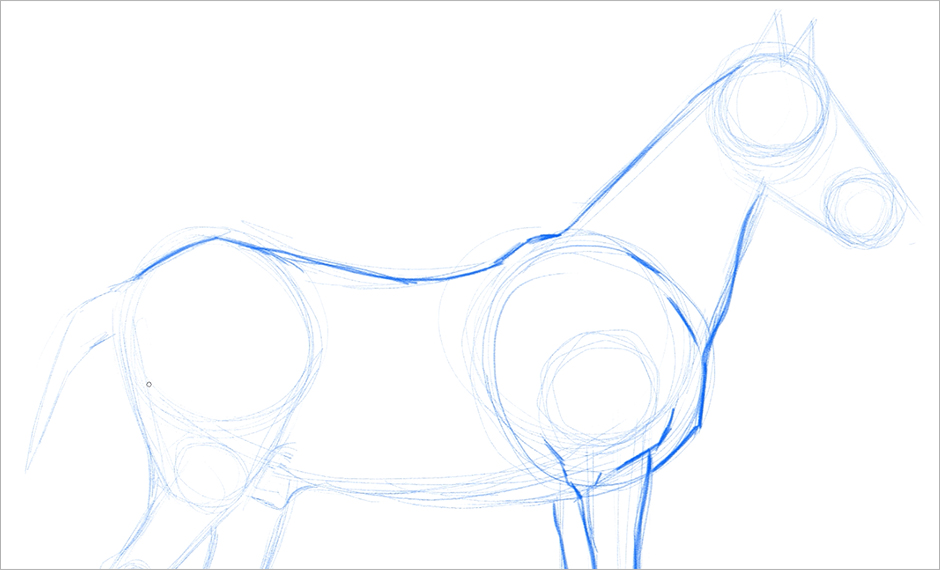
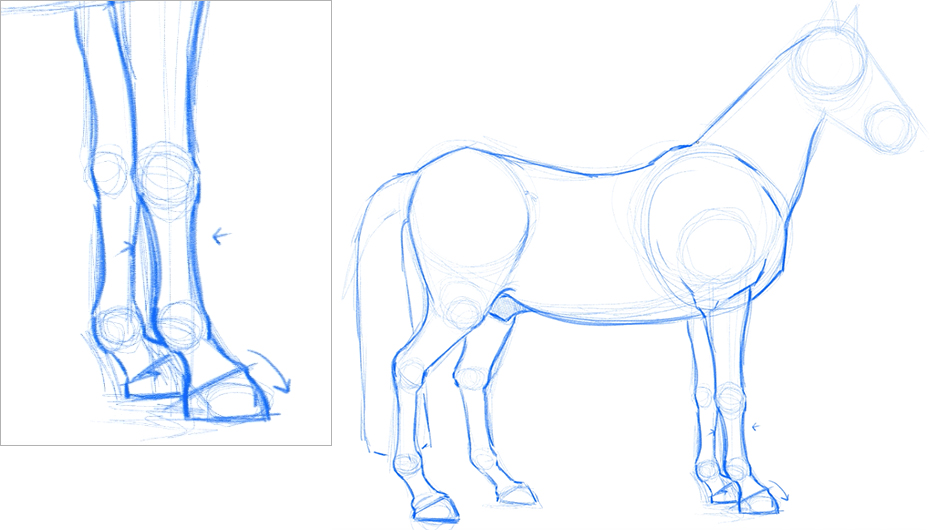
Now we can meliorate appreciate the legs. Discover that the sketch lines that were previously straight now have to bend a piffling inward between the joints (equally indicated past the arrows in the following image) and outward at the joints and the hoof.
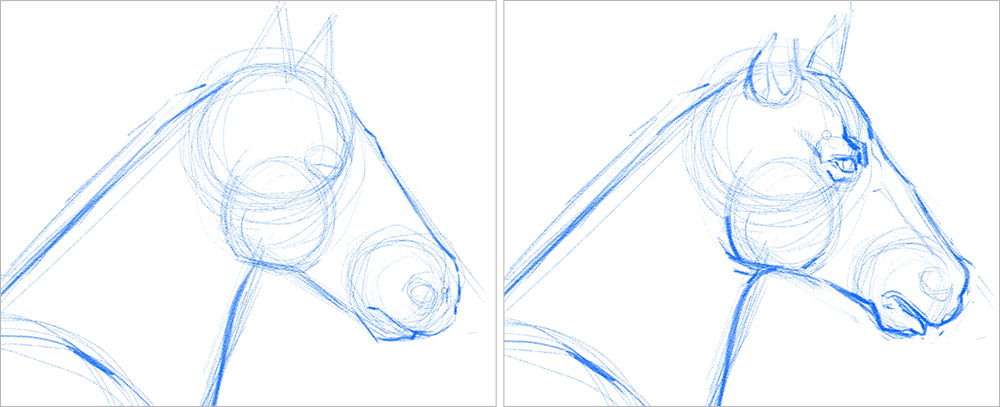
To better structure the skull, I added another circle beneath the largest one (the top of the head) to place the cheek, the most characteristic role of the horse's head. This crucial detail gives realism to the drawing. Next, I place the eye, the olfactory organ, and the mouth. For this specific stride, it is essential to have your reference board at hand.
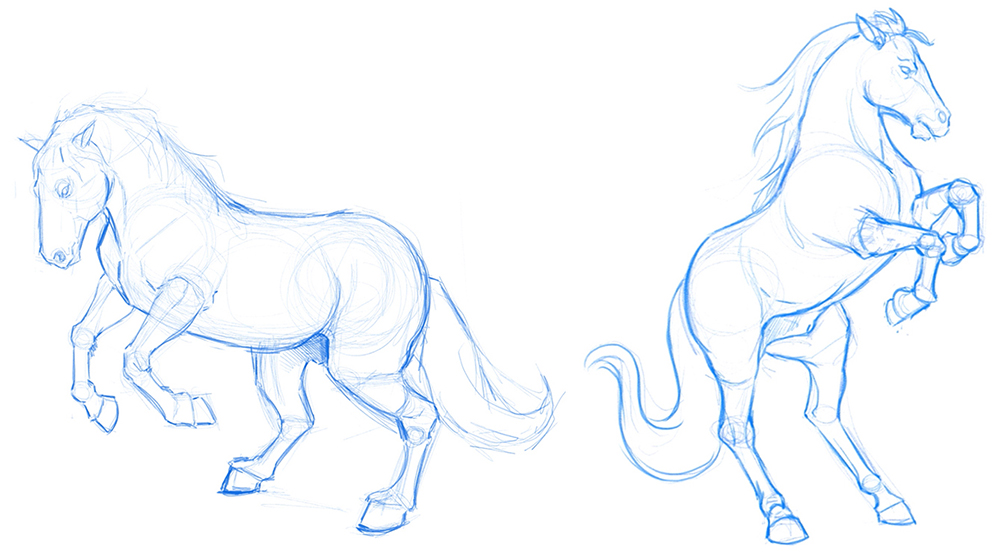
I chose this contour pose for the tutorial considering it is simple, straightforward, and suitable for a tutorial. However, you don't accept to limit yourself. Here are ii other pose sketches to assist you see other pose options.
iv. Clean Art
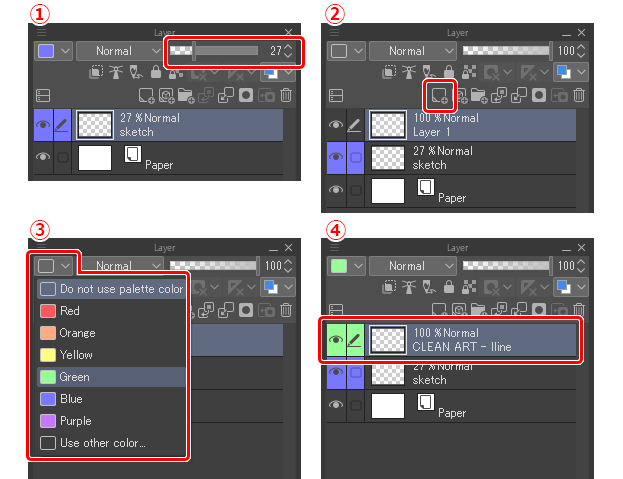
At present that nosotros have our effigy ready, we need to clean upwardly our work. To do this, kickoff lower the opacity of the sketch layer so that it does not bother yous — around 20-30% will be enough (one). And so create a new layer past clicking on the button shown in the image (2). An organisation trick is to give each layer a specific color to quickly exist able to differentiate them (3). Finally, right-click and rename the new layer to "clean fine art," so yous know where your clean lines volition go (4).
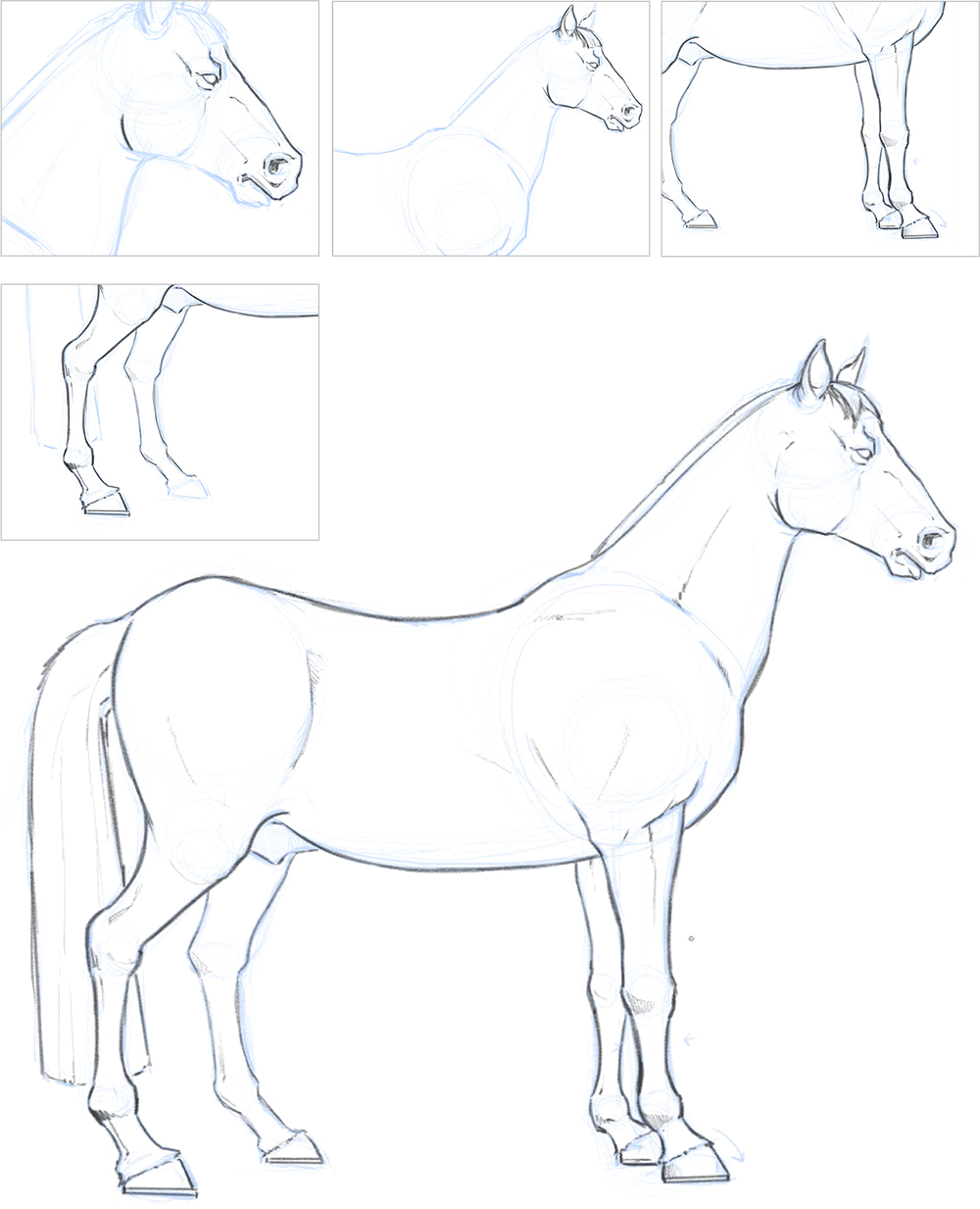
Time to keep drawing. Using the sketch every bit a guide, I will describe in the new layer. I start building, this fourth dimension in a darker color, what volition be the terminal shape of my illustration.
5. Flats
This new step begins the aforementioned every bit the previous one. Create a new layer, rename it, and assign information technology a new colour. In this case, I prepare it as yellow.
Of import: Drag and driblet this layer between the previous two (the sketch and the clean line art) then that your make clean lines art layer is on top of the flats we are most to create.
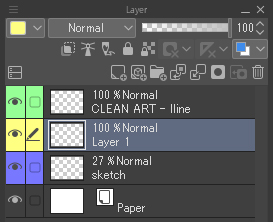
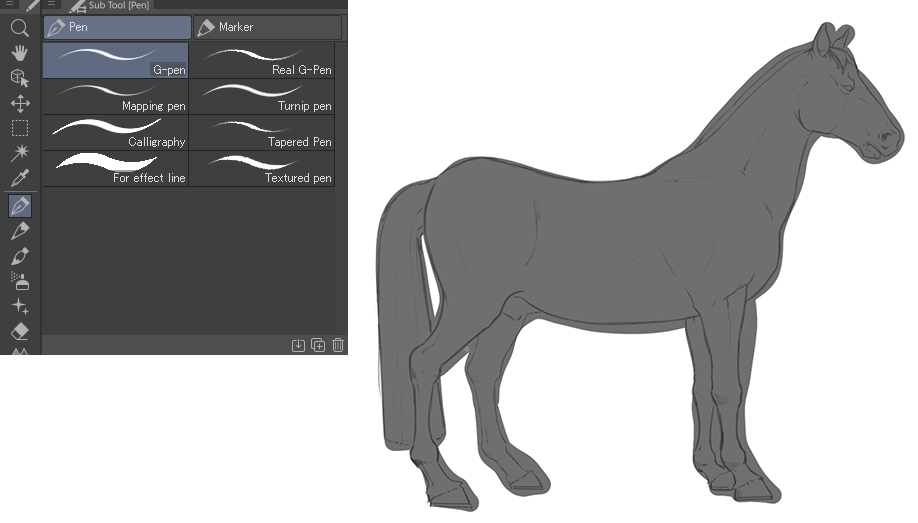
With the GPen tool and a mid-gray color we begin to color the equus caballus.
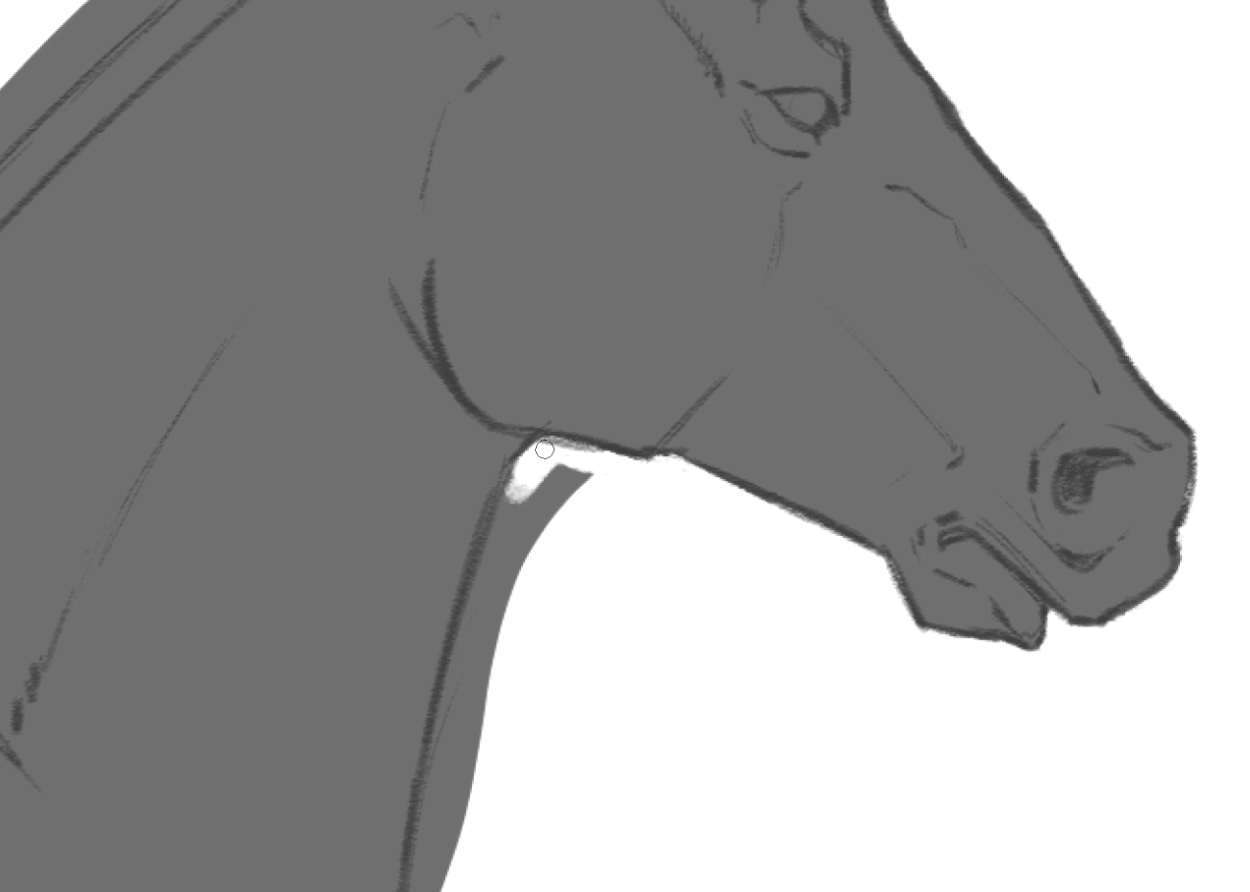
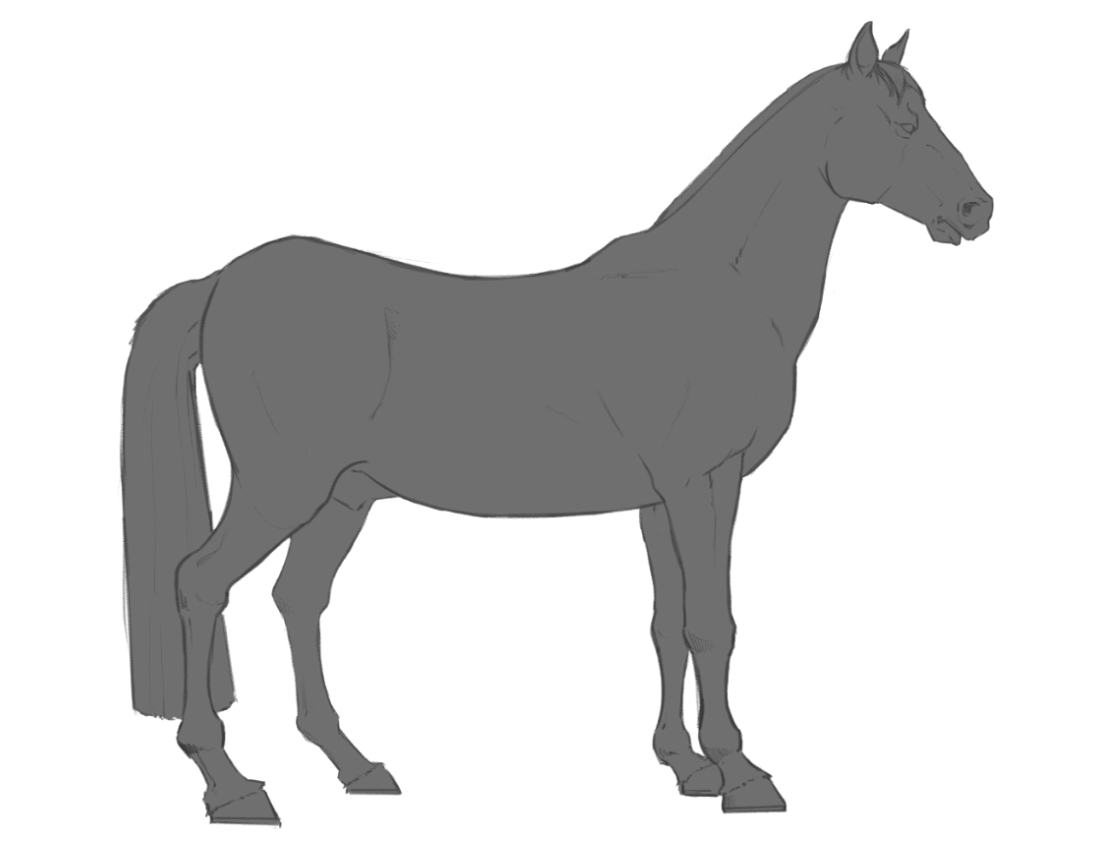
So, with the eraser, remove any backlog color that went past your clean line art with care and patience until there is a clear-divers silhouette without whatever mistakes.
6. Color
With this procedure finished and, before moving on to the side by side ane, I lock the transparent pixels of the colour I but created so that whatsoever further painting will not get beyond those lines. This makes painting much easier and more efficient.
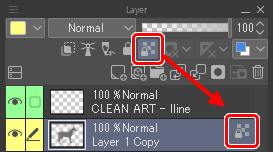
We will also indistinguishable the grey layer (right-click on the layer > Indistinguishable Layer). I volition explain why we will need it in section 7.
At present cull a color that you like for the horse'southward fur. I chose a light earthy tone, but you lot tin try others based on your previously selected references. Use color with the pigment bucket tool.
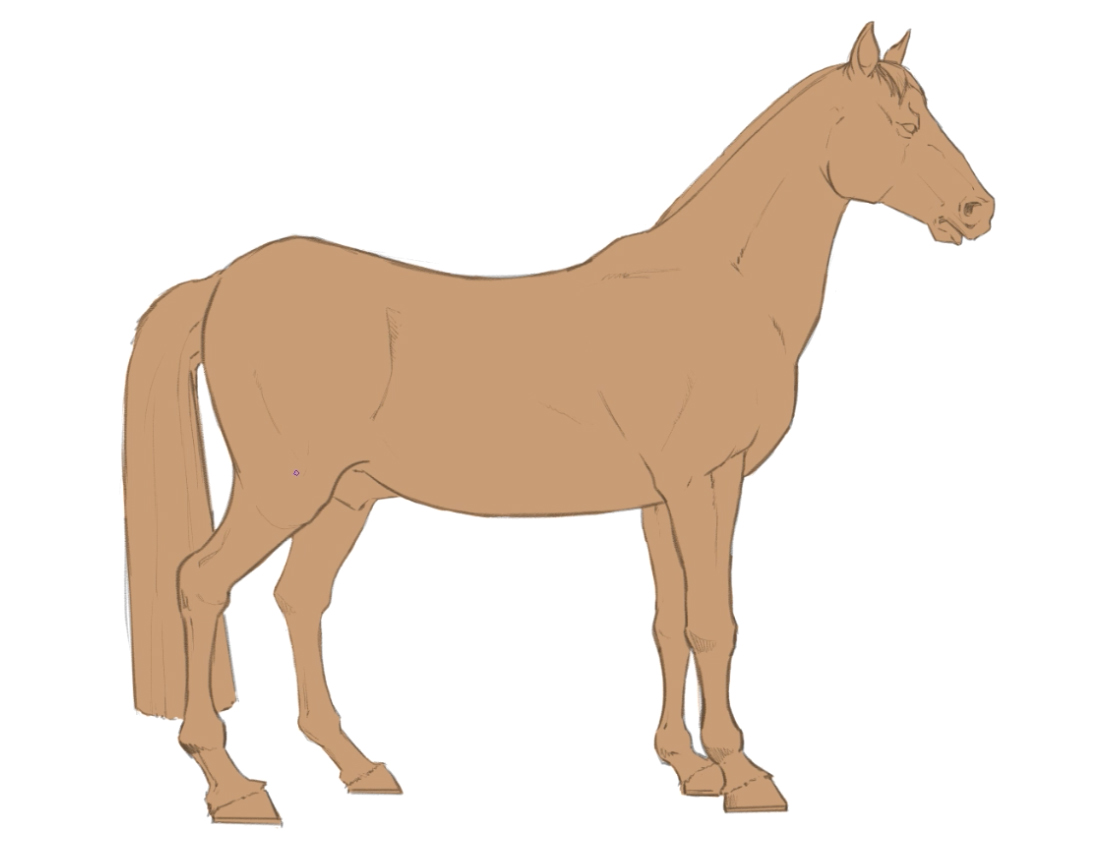
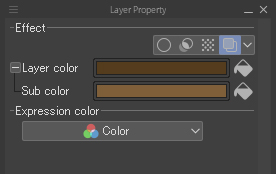
Another way to modify the color of the horse is by selecting the 4th icon from the right on the Layer Properties palette.
When working with different shades of color, my advice is to use the Watercolor Brush in a shade that is darker than the base of operations color of the fur. Wait at the post-obit images:
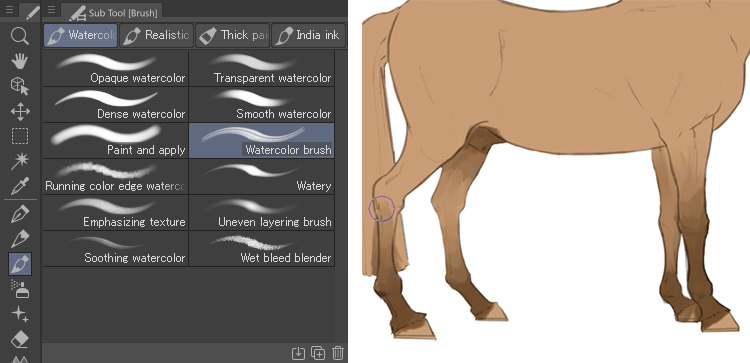
As you can see, I began with the legs and continued with the cage and the mane, the latter two being fifty-fifty darker than the legs.
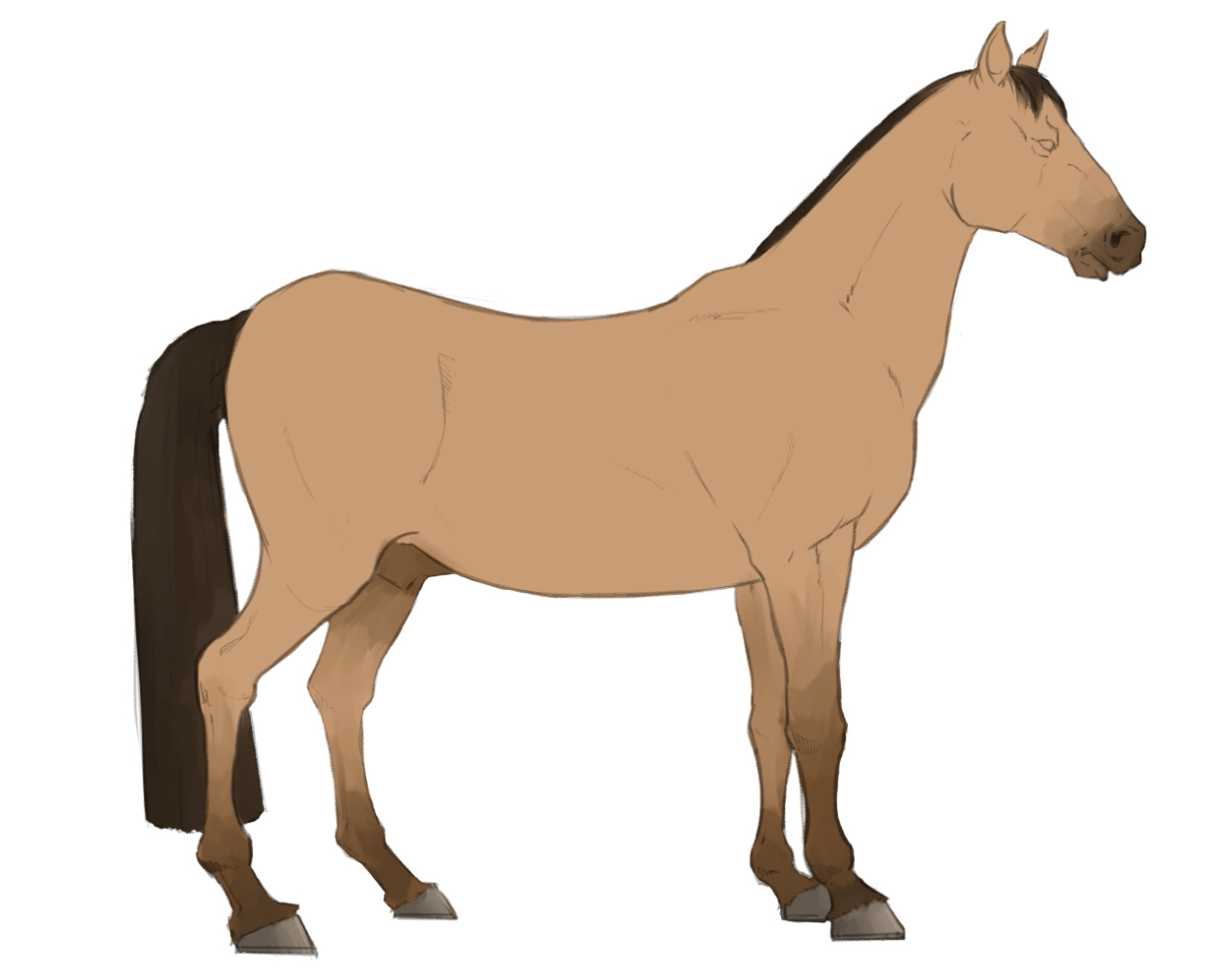
I also used a brown color like the 1 I used for the legs to shade the horse. For this step, take all the time you need to make sure y'all get the correct dark tones for creating volume and depth, especially in the optics and nose.
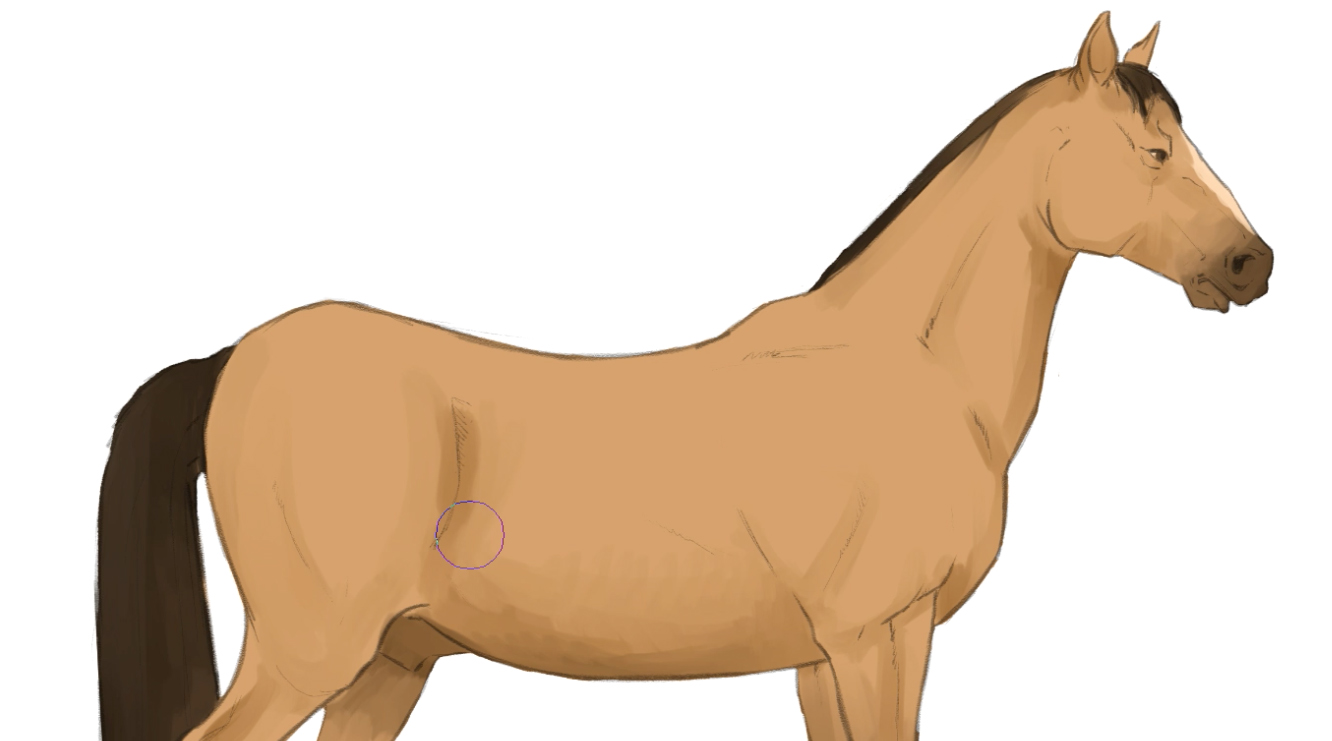
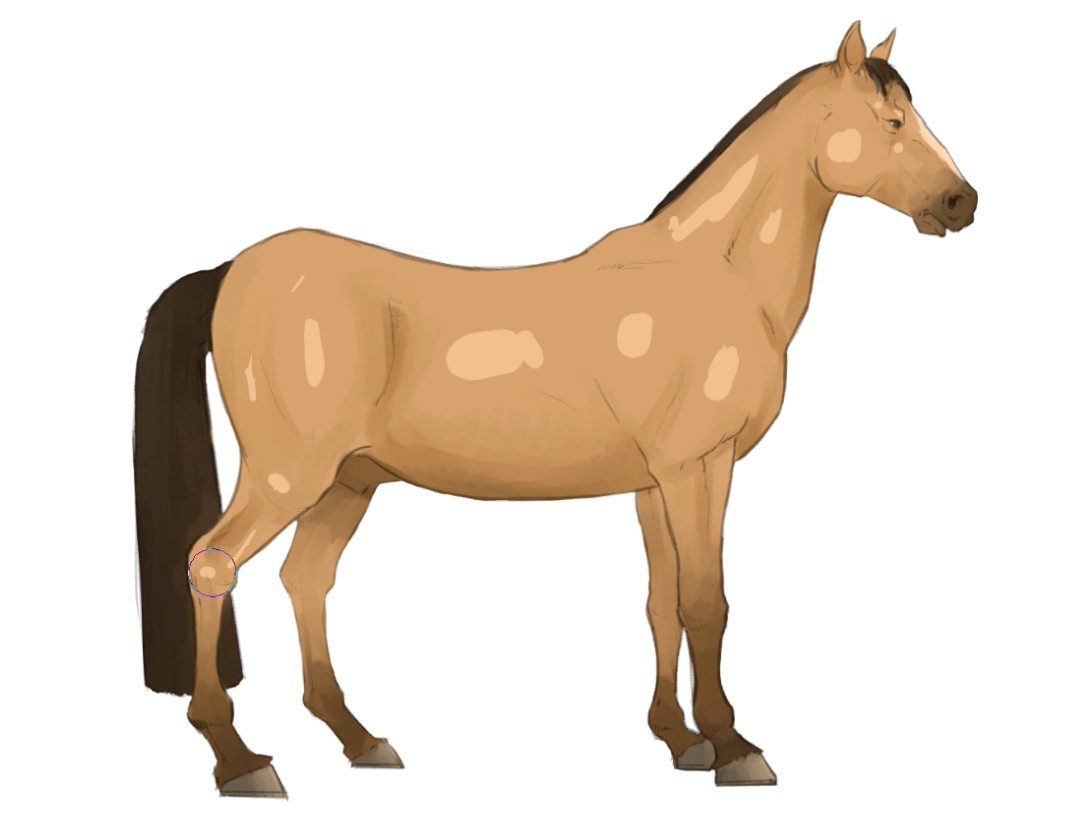
Subsequently the shadows, it is time to add together the highlights. Employ some light spots where the light reflects well-nigh; for example, in the near prominent muscle areas: Cheeks, neck, side, and upper leg muscles.
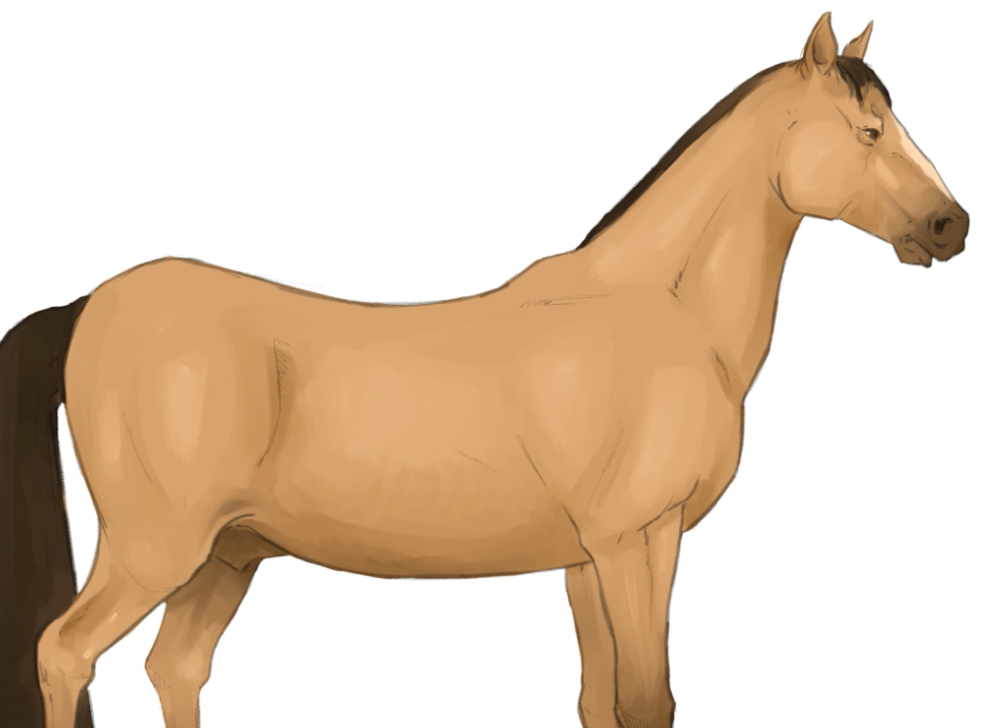
Then apply the Soothing Watercolor Brush to smooth out the highlighted areas while post-obit the shape of the trunk.
7. Presentation
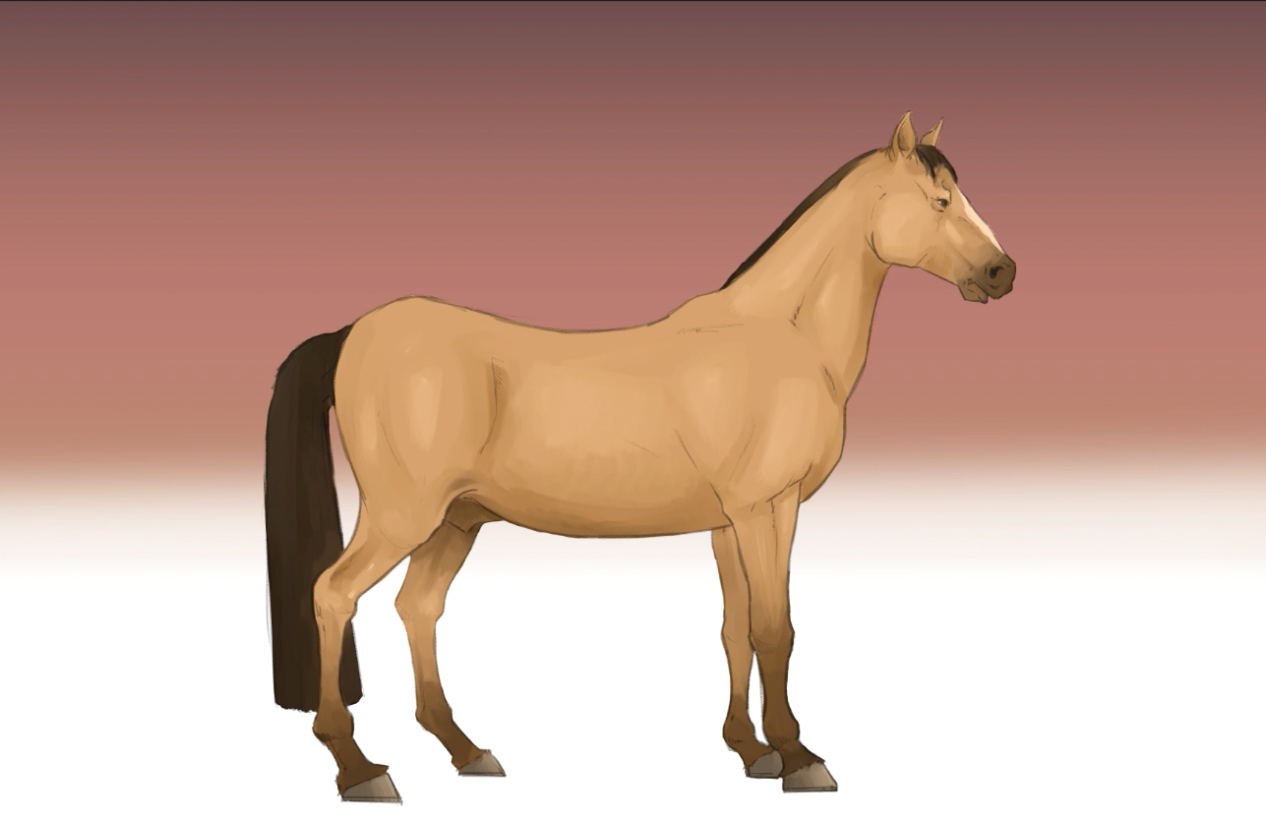
Now, allow united states think about how we wish to present the illustration. First, I create another layer and identify it backside all the previous ones. With the Gradient tool, I use a color that best matches the equus caballus'southward tones and set it vertically.
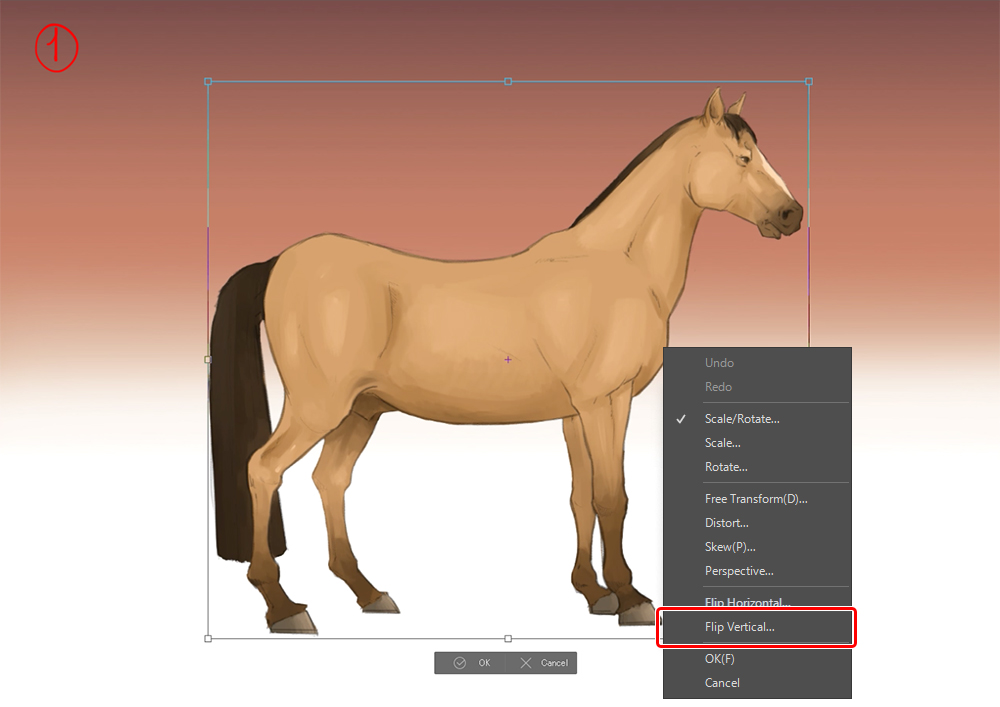
Next, I create the cast shadow, that is, the shadow that the horse projects on the ground to add weight and realism to the image. This is where that duplicated gray layer from step half dozen comes in handy. I transform this layer (Edit > Transform) and right-click on the selection and choose Flip Vertical (1).
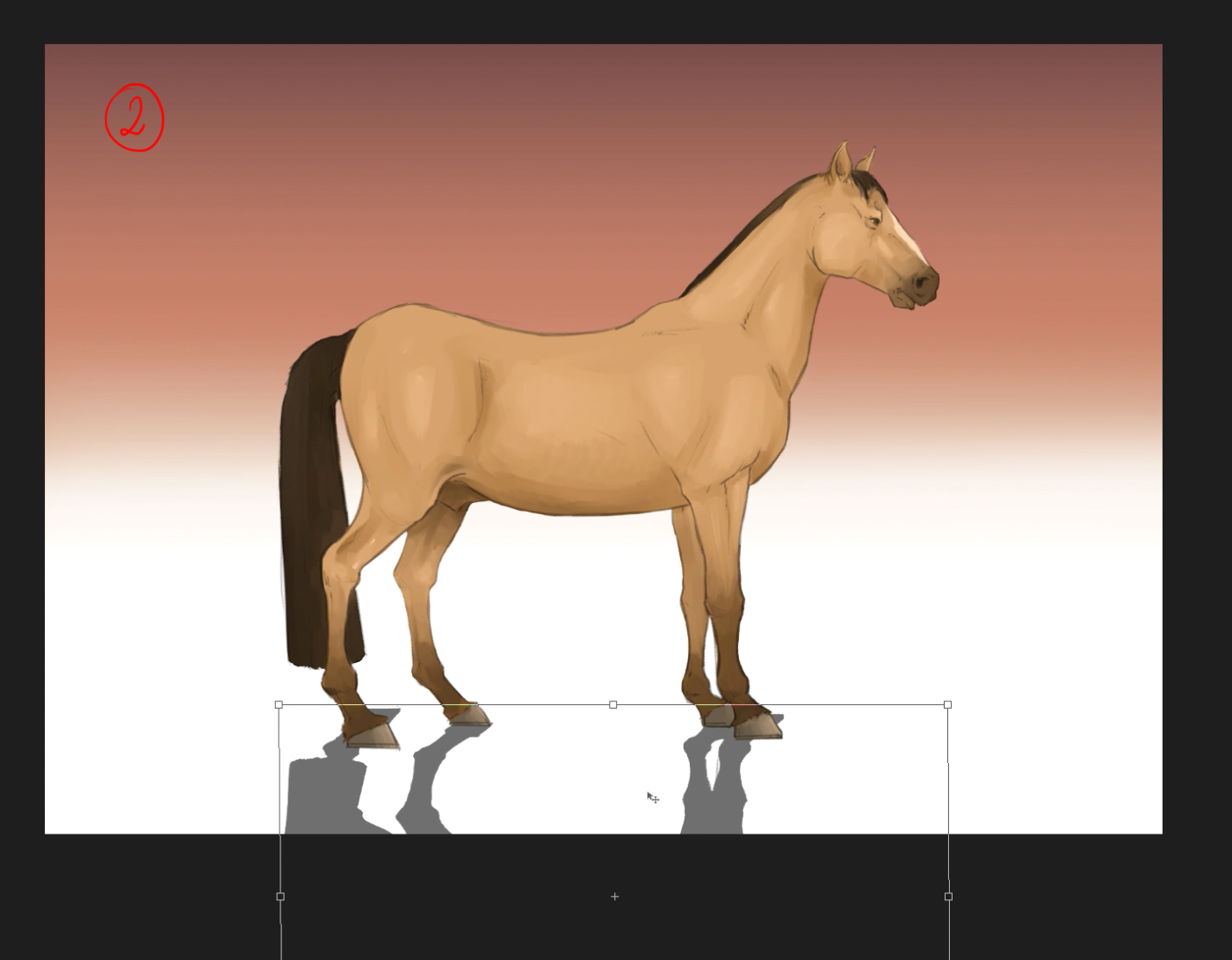
Then I shape it a bit to friction match the legs (ii).
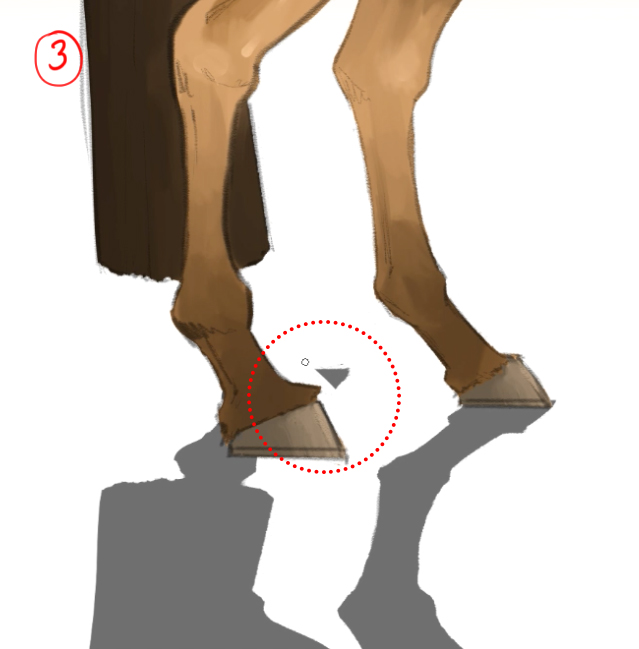
Erase the unnecessary parts (three).
And add some mismatched ones, like the base of the hooves (four).
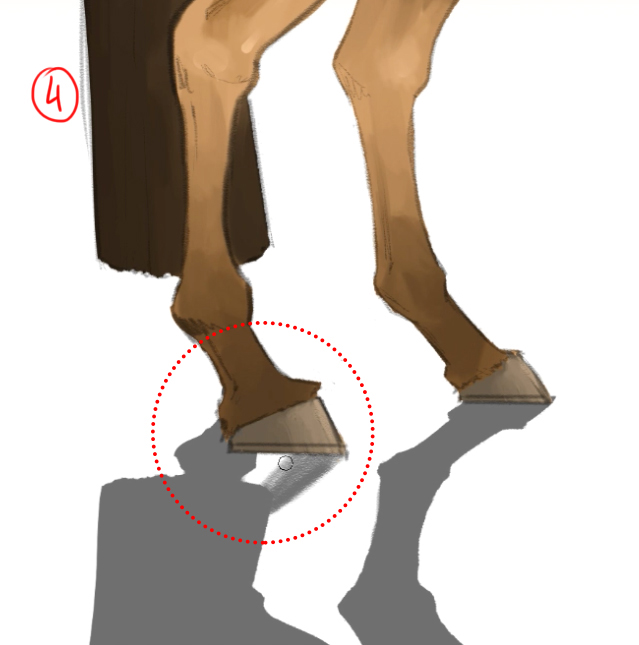
To finish off this shadow, I will apply a swift gradient in the farthest area with the Soft Eraser tool at a large size (800px) (v).
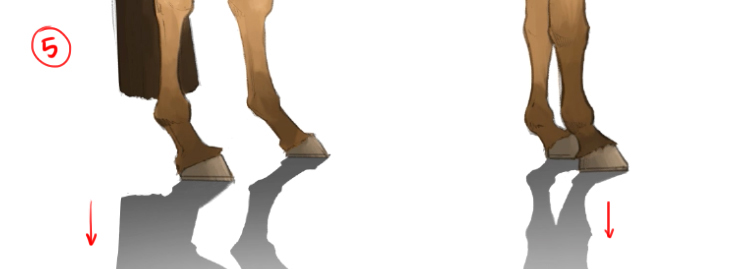
This is a useful technique that you can use in illustrations of characters, objects, or animals.
As the last tip in this presentation, I am calculation a line of calorie-free forth the horse's back and head, which will give a powerful and realistic issue. To practise this, create a new layer higher up the clean line art layer, and paint a line using a very calorie-free warm color forth the upper part of the torso. I and so duplicate this layer and use a Gaussian blur (Filter > Gaussian Blur) to create a glow simulating the reflection of lite.
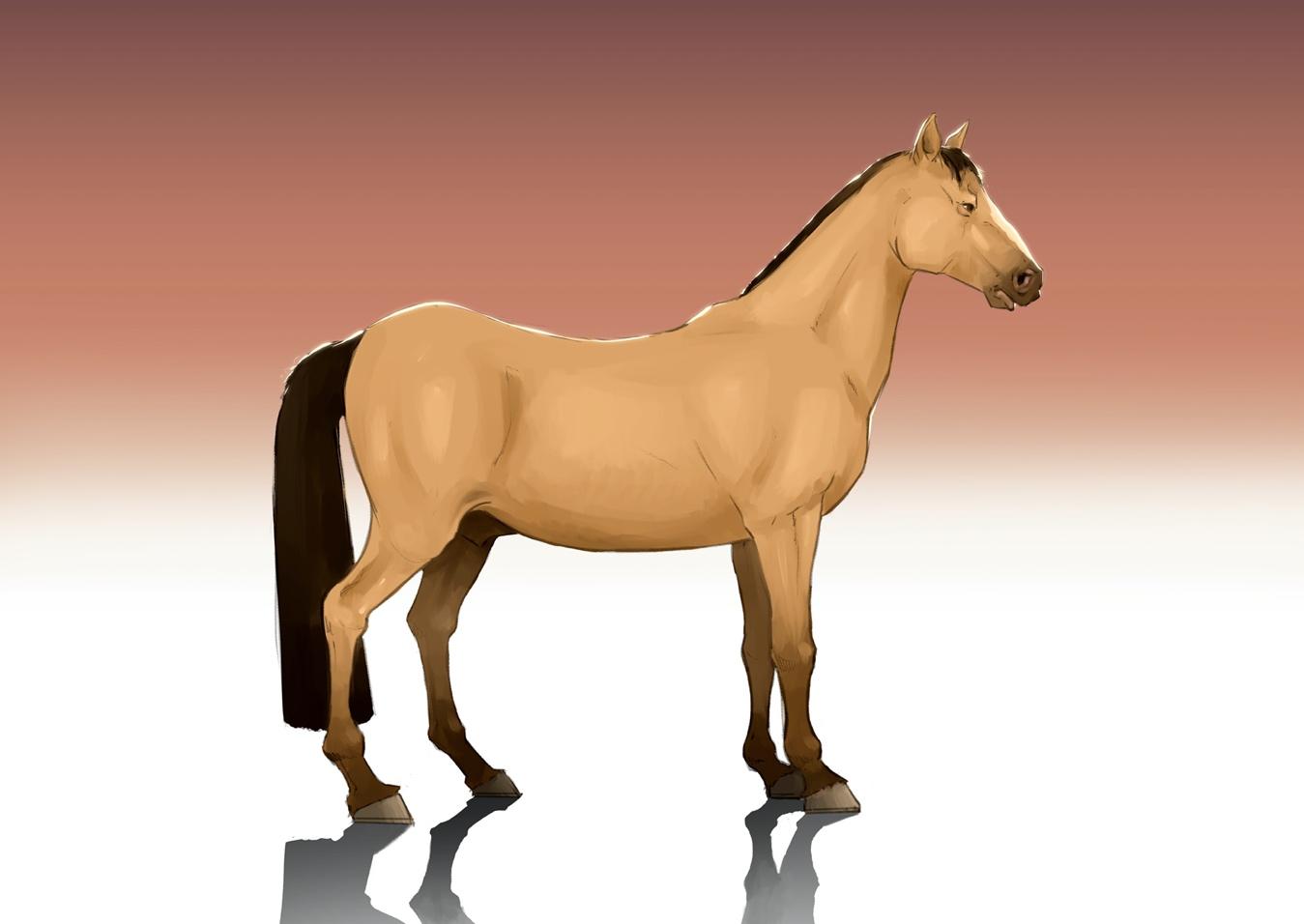
Permit me evidence you some horse poses from other points of view to draw post-obit these guidelines. I encourage you to endeavour them out without fear!
▼Animated GIF
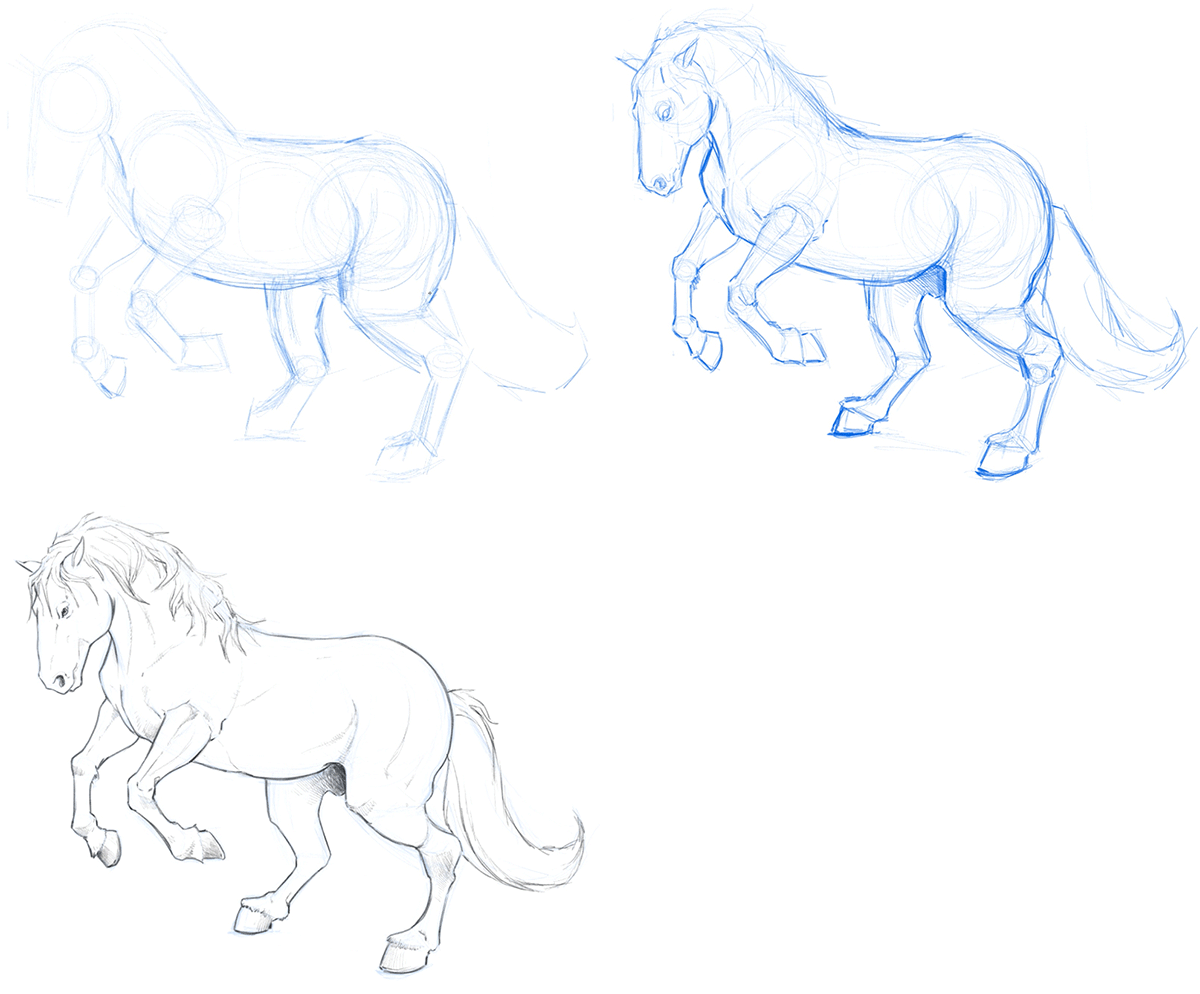
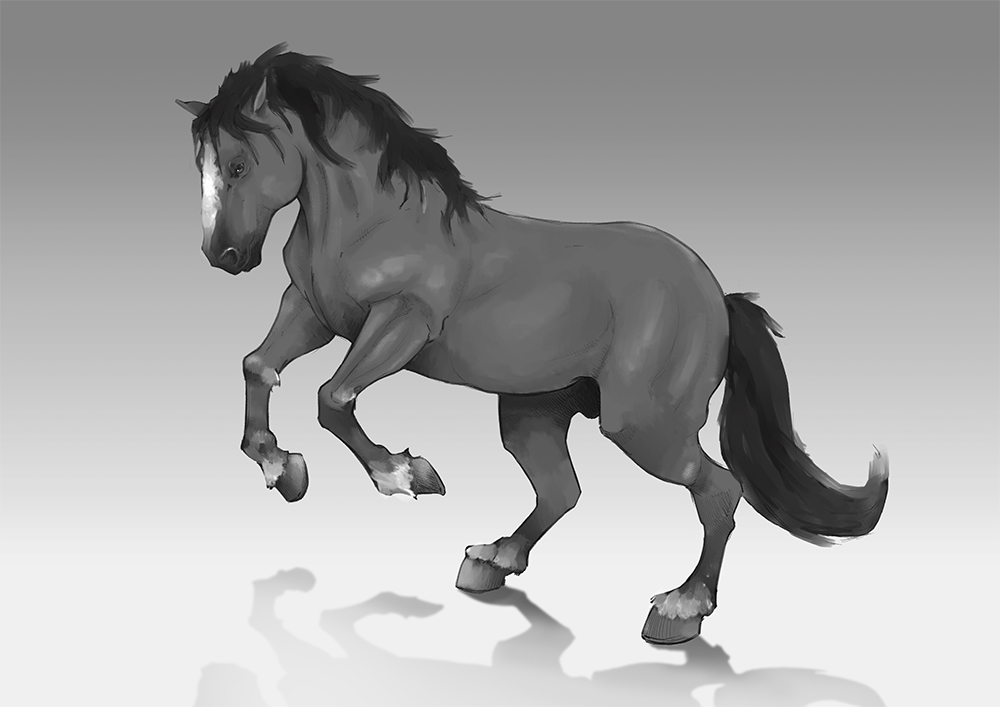
▼Blithe GIF
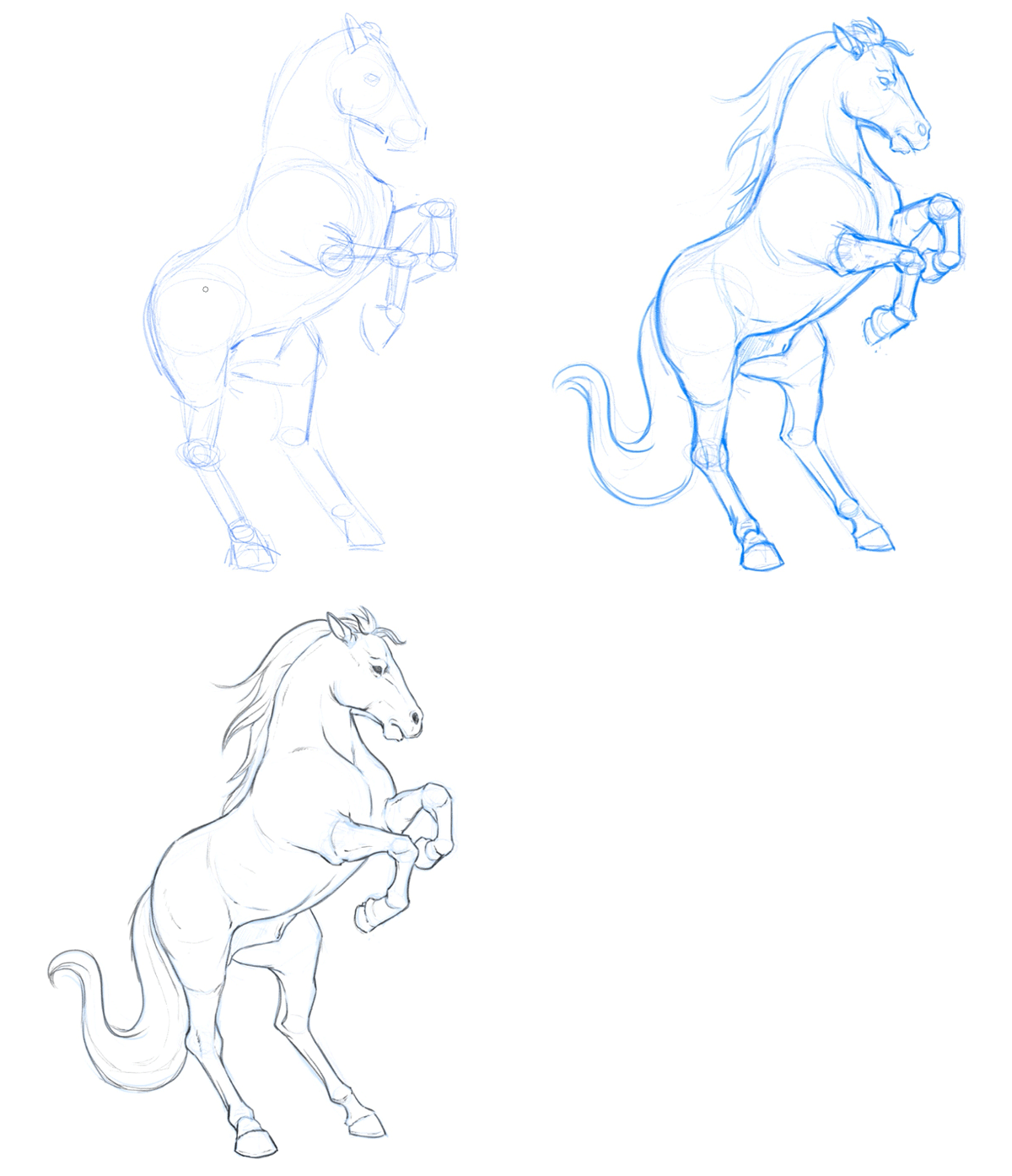
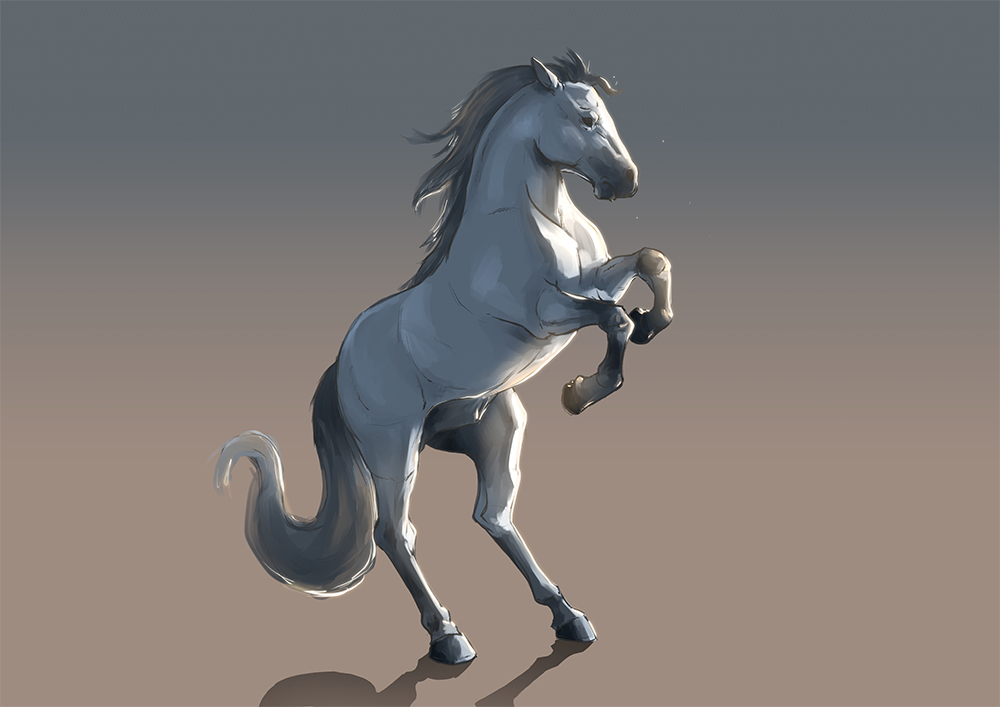
I promise that my communication, together with the video linked to this tutorial, volition assistance you draw horses and brand splendid illustrations with expert proportions and dramatic poses.
Nosotros have reached the end of this tutorial. Delight practice share your best horses drawn using this tutorial with me on Instagram (@Danipuente_conceptart. I would love to see them!
If yous have any questions, I am at your disposal: danielpuentemorales@gmail.com.
As always, it's been a pleasure to depict for all of yous!
– Daniel Puente
world wide web.Danipuente.com
Instagram.com/danipuente_conceptart/
Artstation.com/danipuente

How To Draw A Horse From Your Imagination,
Source: https://www.clipstudio.net/how-to-draw/archives/164904
Posted by: piercewhighletwor81.blogspot.com
0 Response to "How To Draw A Horse From Your Imagination"
Post a Comment